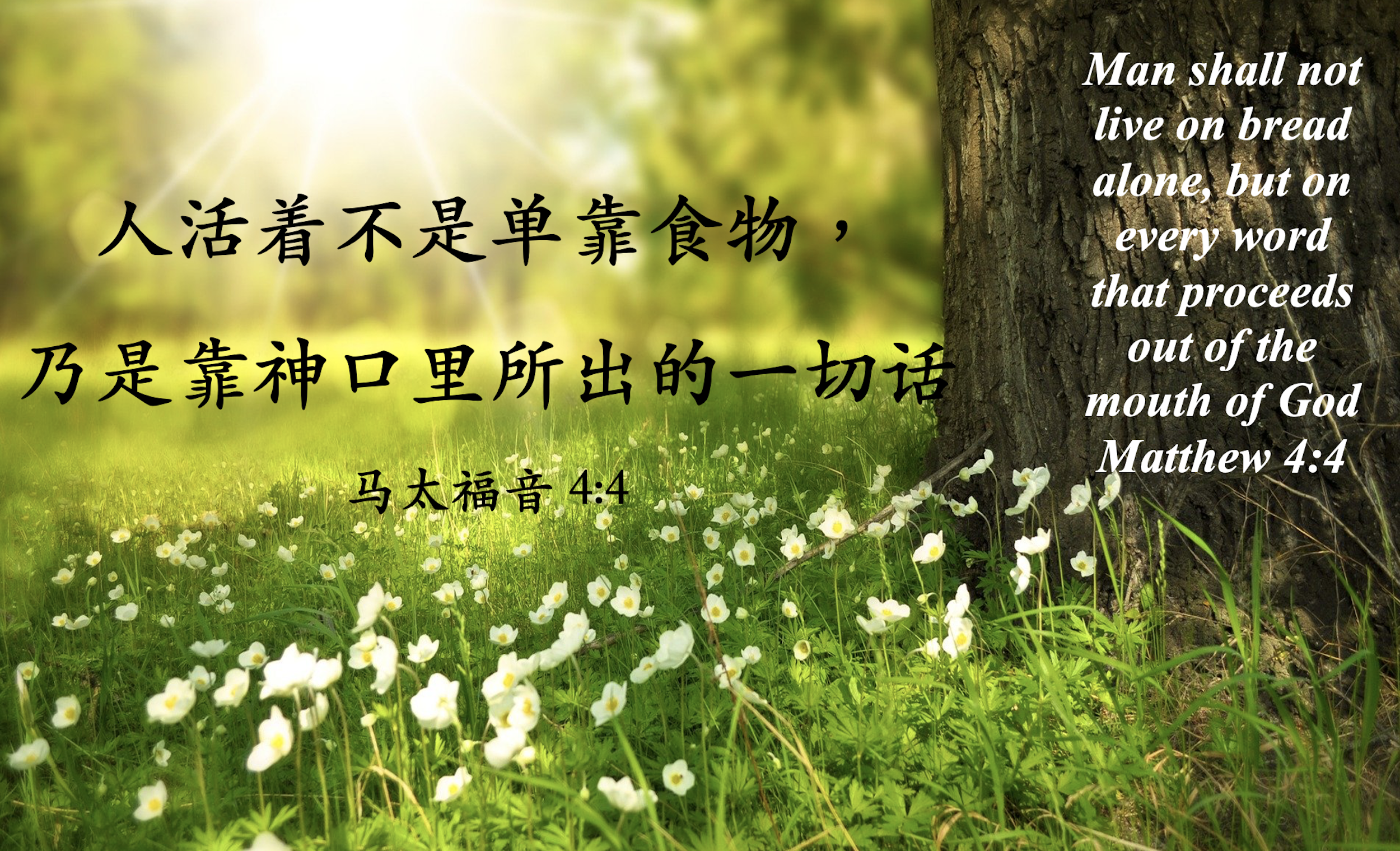
神造的第一个人,名叫亚当。神将亚当造好之后,就把亚当安置在东方的伊甸园里。在圣经里,东方表征光明荣耀的方向,因为荣耀的日光是从东方升起的。而“伊甸”的意思,乃是快乐。伊甸是个快乐、享受、娱乐的地方。这园子不仅美丽可爱,还是生长、产生生命的地方,其中最重要的一项就是树。耶和华使各样的树从地里长出来,可以悦人的眼目。这就是说,神要人喜悦,要使人快乐。神也使各样的树长出果子,可以作人的食物。在这快乐的园子当中,有一棵树作为这园子的中心,叫作生命树。
伊甸园是生命的园子,长出各样生命的东西。而生命树是伊甸园的中心,这生命树预表神自己,也就是预表那将生命分赐给人,叫人喜悦满足的基督。园子当中的生命树,指明神要以食物的方式,来作我们的生命。在约翰福音那里,主耶稣说,祂自己就是生命(约十四6);又说,祂是葡萄树(约十五1)。一面祂是树,一面祂是生命。因此,基督就是生命树。
每当我们呼求主名并祷读主的话,我们就是吃主作生命树的果子。因为主对我们所说的话,就是生命。我们吃主作生命树的果子,就是将祂接受到我们里面,成为我们这器皿的内容。
请享受生命诗歌664首 (点击诗歌名)
The Life in the Garden — Gen. 2:8-9
The first man God created was named Adam. After creating Adam, God placed him in the Garden of Eden in the east. In the Bible, the east symbolizes the direction of light and glory, because the glorious sunlight rises from the east. The word “Eden” means joy. Eden was a place of joy, enjoyment and delight. This garden was not only beautiful and lovely, but also a place where life grew and was produced. The most important aspect of the garden was the trees. Jehovah created all kinds of trees to grow out of the ground, pleasing to the eye. This means that God wants man to rejoice and be happy. God also made these trees to bear fruit, which served as food for man. In this joyful garden, there was one tree at its center — the tree of life.
The Garden of Eden was a garden of life, filled with all kinds of living things. At its center was the tree of life, which signifies God Himself — the Christ who imparts life to man, bringing joy and satisfaction. The tree of life in the garden indicates that God desires to be our life in the form of food. In the Gospel of John, the Lord Jesus says that He is life (John 14:6) and also that He is the vine (John 15:1). On one hand, He is a tree; on the other hand, He is life. Therefore, Christ is the tree of life.
Whenever we call on the Lord’s name and pray-read His word, we are eating the fruit of the tree of life, which is the Lord Himself. For the words He speaks to us are life. Eating the fruit of the tree of life means we are receiving Him into us to become the content of us (we are the vessel).